Rebranding Fashion, Innovation and Sustainability through Technology As human needs arise , there will always be needs to improve so that different organization doesn’t fall out of trend especially when it comes to the world of fashion. Therefore the world of fashion is constantly adjusting it’s supply in 2025 in other to balance with the dynamic transformation, driven by development and need to attain sustainability, cutting edge technology, and rapidly evolving consumer demands and expectations.
Durable Materials and Common Fashion Systems Sustainability has actually been moved from a specific trend to an aim where the goal is to maintain and prioritizing Eco friendly materials and meeting higher demand in production models to minimize environmental harm and waste. Different feasible heights has been attained while bio based textiles are leading the charge. We can see a drastic change taken for example MIRUM by Natural Fiber Welding, a plant based leather alternative which are gotten from renewable resources like cork products and coconut fibers, which offers a luxurious yet sustainable and better replacement for traditional leather, free from toxic chemicals and with a significantly lower carbon coming into play.
Similarly, a company popularly known for biodegradable glittering product such as BioGlitz a final product derived from eucalyptus extract, which provides a sparkling, microplastic yet free alternative for cosmetics and fashion adornment, which solves the growing concern which was raised due to over microplastic pollution in oceans and ecosystems. Circular fashion being one of the aim is fashion production movement, with the aim of recycling or upcycling, and a reversible systems to extend the life cycle of garments and usage. Platforms like Reverse Resources are revolutionizing the industry by digitally mapping and tracing leftover fabrics, which manufacturers then uses to produce other textile by turning waste into new products on an industrial scale. This has also helped to reduce non biodegradable waste and conserves resources turning them into a new one, aligning with consumer demand for acceptable production. The fairly used hand clothing market has also experienced a massive demand with the aim to to account for 10% of the global fashion market in 2030.
Organizations like Vinted, Depop, and ThredUp are also adopting to these shifts, in a way that helps consumers to buy and sell formerly used garments, fostering a culture of reuse, and challenging the traditional ‘fast fashion’ and ‘dump’ model. These organizations are increasingly going to conform into resale programs, with companies like Patagonia and Eileen Fisher offering repair and take back of its product schemes to promote longevity over disposability.
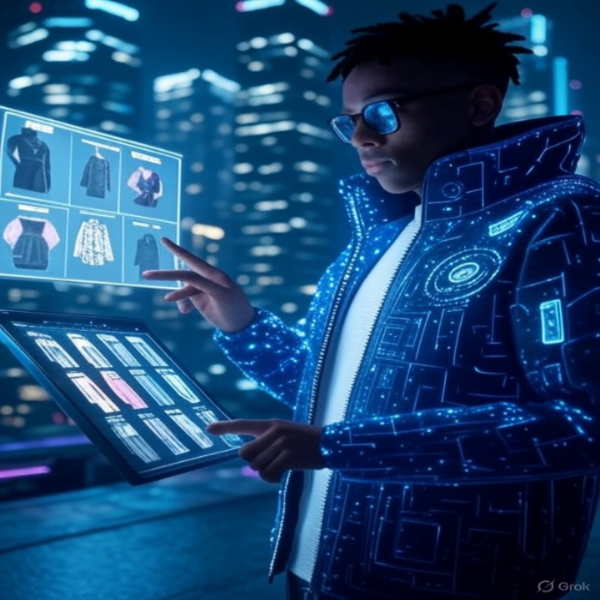
Enhanced Clothing and Tech Wears The human need for sustainability Is very essential even in the world of fashion and technology has therefore made the journey so easy. Fashion is therefore experiencing a new beginning in the world of smart clothing, where style meets functionality in more useful ways. Fitness trackers is a typical example of this smartness, smart fabrics embedded with sensors and conductive fibers are enabling garments to do much more other than the normal function of covering oneself. Temperature regulating clothing is another good example , sensors are attached to clothes such as jackets with built in heating elements powered by lightweight batteries, which offers comfort in extreme weather by constantly regulating the temperature, while Ultra Violet reactive fabrics whose components shift colors under sunlight add an element of beauty and satisfaction to everyday wear. These innovations are are seen in our everyday lives not just written hypothesis but part of a growing market, with the global enhanced clothing industry expected to reach $10.3 billion by 2030, which is constantly in need due to its demand for multifunctional apparel. This entanglement of fashion and technology is particularly appealing to younger, tech interested consumers who value both aesthetics and innovation. Many companies are actually adopting these new developments for better improvement like Adidas are pushing boundaries with smart apparel that monitors biometric, such as heart rate or muscle activity, while satisfying its customers , stylish designs suitable for both athletic and casual settings.
Empowering Creativity in Fashion Through AI The current generation is adopting Artificial intelligence AI in revolutionizing every sectors in the fashion industry, from manual designs to automatic and self driven machines and chain management. AI driven machines and computer driven machines are at the forefront, enabling brands to create stressless and designs which are neater, classic tailored experiences for consumers. For example, the monogram designing AI system scans hard copied designs and reproducing the same with more beautiful unique features , rapidly translating them into marketable clothing designs. Similarly, generative AI tools can be used to predict operations for brands like Amazon Fashion, optimizing product descriptions, predicting designs, and enhancing maximum supply chain efficiency to minimize disappointments and demand problems . Designing Digital fashion has been made so easy through AI, virtual garments designs like non-fungible tokens (NFTs) are are at the highest peak and easily built in the metaverse. A unique single digital outfit can be used by the same brand across multiple platforms, which offers endless customization while reducing the need for resource intensive manufacturing. Many crypto communities are adopting these trend is because it is appealing to their consumers, who increasingly value digital identity and professional as it is an extension of their personal style.